
SAFARI ETIQUETTE: DOS AND DONTS IN THE WILD
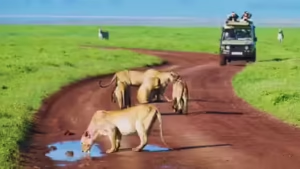
Considering to have a safari in the world’s best safari destination East Africa is a very satisfactory activity. No matter the type of activities you engage in such as gorilla trekking in Bwindi of Uganda, watching lions in Tsavo of Kenya or the Great wildebeest migration in Tanzania, you will experience uniqueness and appreciate the value of nature.
However, for one to have a successful safari in East Africa, there is a kind of discipline and behavior they have to demonstrate. Safari etiquette is not about choosing the right clothes, cars or politeness to fellow humans, but an entire set of respect to not only the animals but also their care takers and every involved in making you have a great wildlife safari.
Why do you need to have a good etiquette in the wild during a safari in East Africa?
Animals in the wild are typically in their natural habitat, compared to those in zoos. So you know that as every other human being doesn’t like any sort of disruption or inconvenience by a visitor in their homes, so are these animals, as you found them, is how you should leave them. Therefore this is why your behavior matters too much
To begin with, it is for the safety of all humans on ground because in case the animals feel out of place, they can launch attacks.
It promotes sustainable tourism so that many visitors can come from all over to still find these animals.
It protects animals from disturbances and unnecessary stress.
Betters wildlife viewing as you will not scare them away by bad behavior, so many will be in sight.
Let’s now dive into the dos and don’ts in the wild.
Dos of safari etiquette
Adhere to the guide’s instructions: Before an activity, guides are always equipping visitors with what to do and what not to do. They are usually experienced and know exactly what they are saying and mean. Therefore, it is your responsibility to behave and follow what they say, especially when setting off for the activity and during it.
Dress code recommendation: Endeavour to wear neutral colors that blend in well with the environment so as to minimize or attract attention from insects and animals.
Respect for fellow safari guests: Having etiquette will not only be about wildlife but also fellow human. This can be done through not blocking views to others, being punctual to activities such as game drives, speaking to each other with respect so that you can also enjoy the wildlife safari.
Always inside the vehicle: While in the wild, you are surrounded by both slow and fast animals, predators and non-predators, which makes you prone to attacks especially when you are outside. The animals can easily sight and smell humans when they are outside the vehicle than when one is inside, so unless permitted, do not get out of the vehicle.
Avoid making noise: National parks are not a place to play loud music, do loud talks as animals are very sensitive to sound and so noise can either chase them away or make them attack you since you are posing as a threat to them.
Patience: This is another key aspect of safari etiquette as there is no guaranteed time for wildlife to come to sight. It is not a predictable activity and so when they come is when they come, which can take hours, and so for one to benefit, they need to have patience in full levels.
Follow national park rules: National parks also have rules to follow by everyone who enters that space. These include no feeding wildlife, curfew hours, speed limit which is 20km/h, restricted driving zones among others. All these are to promote conservation of wildlife.
Respect for wildlife space: It’s very uncomfortable when one encroaches on your personal space and the same applies to animals. They can either move away, kills the entire sighting for those close by, or attack you since you are considered a threat.
Do not litter: National parks do not have traces of garbage such as plastic bags, bottles, pieces of paper and others that people usually dump anywhere outside. Improper disposal of garbage, especially plastics can damage wildlife, especially when they consume them, which damages the eco system.
Don’ts of a safari etiquette
Do not use flash photography: Of all disturbances, animals hate abrupt light as it makes them nervous and stressed. It messes up with their hunting routines.
Do not litter: Dumping in the wild affects he eco system as it can kill animals when they accidentally consume plastics or anything that does not work well with their bodies.
No sudden standing up: Every activity done in the wild should be done slowly to avoid causing the animals alarm to their run away or launch at you.
Do not feed the animals: These mammals do not consume the same food as humans. So, feeding them means them getting sick, creating a dependence, cause them to be aggressive towards humans.
Do not interrupt animal activities: Natural operations such as feeding, parenting, mating and hunting.
Do not forget disrespect culture: In case you visit local villages, appreciate culture the way it is and do not be wise where not necessary through taking photos without permission or indecent dressing.
Do not wear strong fragrances: Some perfumes and lotions may attract insects and also interfere with the sense of smell of animals.
Do not ignore safety booking: No matter how come they are, animals can change at any time especially when they feel threatened.
A safari can be very successful especially when you stay in line with all that is told to you. It grants you access to the uniqueness of wildlife in the different places you may visit, appreciate activities and the natural environment.
Your good etiquette will not only save you from attacks or disrupt activities but also conserve the wildlife so that you can come again and visit them, finding them in their originality, in multiplication and safety.